FINAL FRONTIER

Space Science

Human space exploration helps to address fundamental questions about our place in the Universe and the history of our solar system.

By addressing the challenges related to human space exploration, we expand technology, create new industries, and help foster a peaceful connection.

Space Exploration has contributed to many aspects of everyday life, from materials, power generation, energy, storage, recycling, waste management, advanced robotics, health, medicine, transportation, engineering, computer software, solar panels, implantable heart monitors, cancer therapy and more.

No other activity on Earth compares to the unique challenges of space exploration. It offers a unique and evolving perspective on humanity's place in the Universe: What is the nature of the Universe?

Is humankind's destiny bound to Earth? Are we and our planet unique? Is there life elsewhere in the Universe?

Governments and private enterprises, which are increasingly investing in space exploration, are creating new job opportunities and economic growth opportunities.

A picture of an image with the words " interface enabling space ".

Branches of
Space Sciences Astronomy

  • Fields of astronomy defined by approach
  • Observational astronomy
    – Observatories on the ground as well as space observatories take measurements
    of celestial entities and phenomena
  • Astrometry – studies the position and
    movements of celestial objects
  • Amateur astronomy
  • Theoretical astronomy –mathematical modelling of celestial entities and phenomena
  • Fields of astronomy defined by scope
  • Space architecture
  • Archaeoastronomy – the history of human understanding of the universe
  • Planetary geology
  • Galactic astronomy –the study of our Milky Way galaxy
  • Extragalactic astronomy
    – the study of the larger universe beyond the Milky Way
  • Physical cosmology –the study of the Universe as a whole
  • Aerospace engineering
  • Astronautics
  • Astrophysics – study of the physics of the universe; of extraterrestrial objects and interstitial spaces
  • Space plasma physics
  • Orbital mechanics or astrodynamics, which also has applications to spacecraft
  • Stellar astronomy – the study of stars
  • Solar astronomy – the study of our Sun
  • Planetary science – the study of planets, especially those other than Earth
  • Space archaeology – the study of human artifacts in outer space
  • Space-related interdisciplinary fields
  • Astrobiology
  • Astrobotany
  • Astrochemistry or cosmochemistry
  • Cosmology
  • Planetary science –overlaps with Earth science
  • Micro-g environment research
  • Forensic astronomy
  • Space archaeology – the study of human artifacts in outer space
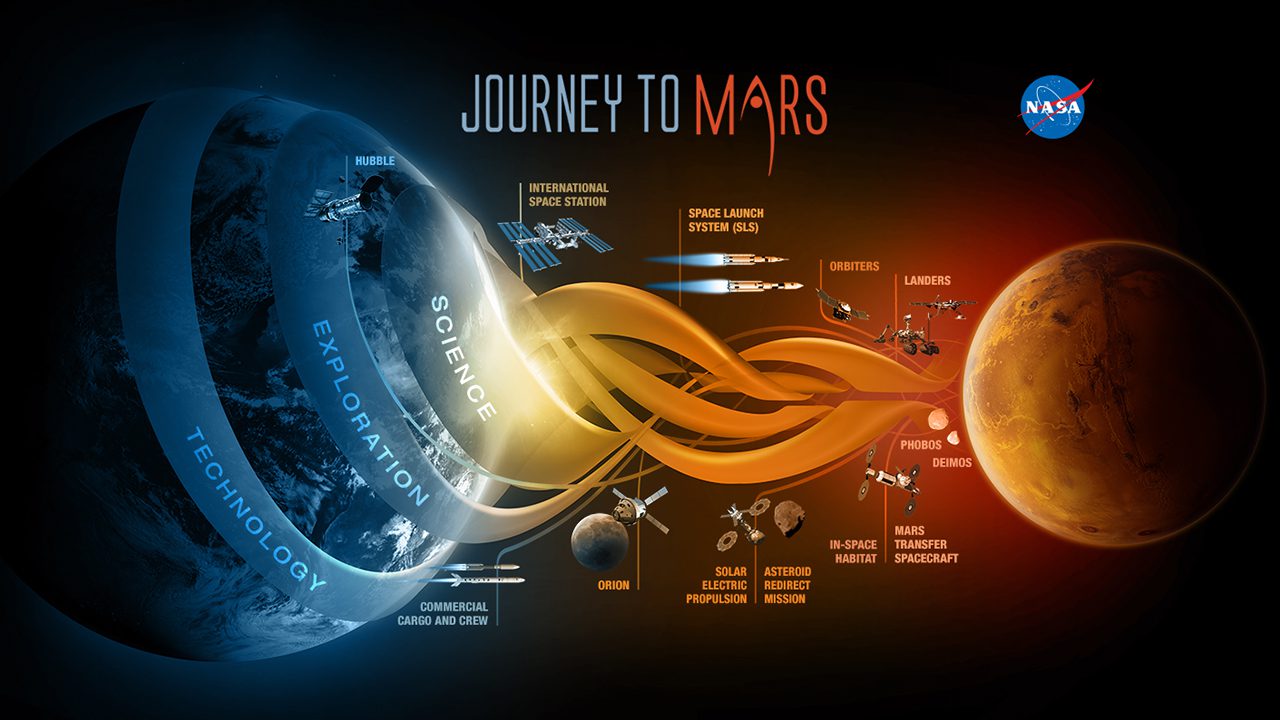
A graphic of the journey to mars

Join!.. Our Worldwide High School Scholars

Private Universities

American University
Babson College
Boston College
Boston University
Brandeis University
Carnegie Mellon University
Case Western Reserve University
Duke University
Emory University
George Washington University
Georgetown University
Johns Hopkins University
Lehigh University
New York University
Northeastern University
Rice University
Southern Methodist University
Stanford University
Tufts University
Tulane University
University of Chicago
University of Miami
University of Notre Dame
University of Rochester
University of Southern California
Vanderbilt University
Villanova University
Wake Forest University
Washington University in St. Louis